
General Knowledge segment.
Here are a few commonly used nails in the building trade along with a light description about the nail and how it is used. Using the wrong nail for the job can cause damage to the wood and lack holding power.

Common nails are the most widely used nail used in general construction and are the nail type used where building code requires certain framing construction. These nails have a thick shank and are made from iron wire. They are most commonly used with dimensional lumber (e.g., 2x4 framing). The common nail has a wide head having a smooth or textured surface and has a sharp diamond shaped point.

Box nails are wire nails similar to common nails except that they have thinner shanks and are not to be used for dimensional lumber framing construction requiring common nails. This is because box nails do not have as thick a shank as a common nail and have less holding power.

Duplex head nails are a specialty nail useful for temporary construction, such as form work when pouring concrete. Let's say you were setting up a form for pouring a section of sidewalk. You'd use this type of nail to put the forms together.
The nail's double head (duplex) makes it easier to remove and pull out of the form boards or other temporary construction.

Annular ring or ring shank nails are another specialty wire nail that have rings on the shank providing better grip and additional resistance to pull-out of the lumber. This type of nail is also used for drywall nails or deck board nails because of the pullout resistant feature of the annular rings on the nail shank.

Casing and finishing nails are similar and differ primarily in the shape of the heads. A finishing nail has a small slightly rounded head just a tad bit bigger than the nail shank. The head is designed to fit into a nail set to be countersunk and the nail hole filled.
A casing nail is often used in exterior applications and is often galvanised. The nail head of a casing nail is tapered and may be set flush or just below the wood surface.
TIMBER GRADES AND USES.
Once timber has been cut at a mill it the gets graded. These grades are rated by strength and visual appearance. for example..
Clears grade
| This timber has no knots or deffects in it and is used for making furniture. | |
 |
| Dressing Grade A tight knot grade for use in furniture, panelling, and high quality exterior use. Contains a few defects but can be used effectively in furniture. |
|
 |
| Packing/Boxing Grade Suitable for packaging, pallets and other industrial use. This Grade contains many defects and is therefore used for non-visual purposes like the boxing for cement work. |
|
 |
TREATED TIMBER.
H1 = Low decay hazard. This includes timber used for framing, interior lining and trim.
H3 = Moderate decay hazard. Timber is exposed to weather but not in ground contact. eg. Fence rails.
H4 = A high decay hazard. Timber is exposed to the ground and fresh water. For example: sawn timber, fence posts, retaining walls, horticultural poles.
H5 = Severe decay hazard, eg. building piles and poles
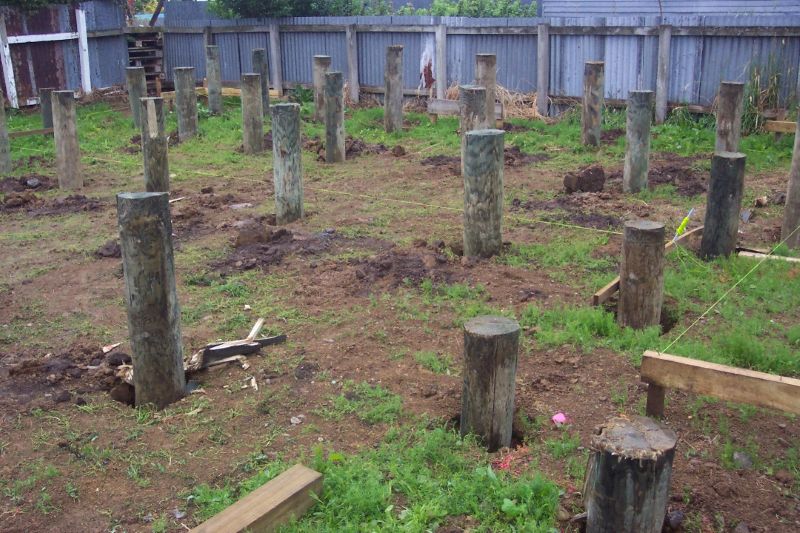
H6 = A marine hazard or water immersion, eg. marine piles

1 comment:
This is awesome and best blog. Impressive!!
SAFEALL Best Wireless Doorbell Camera
Post a Comment